
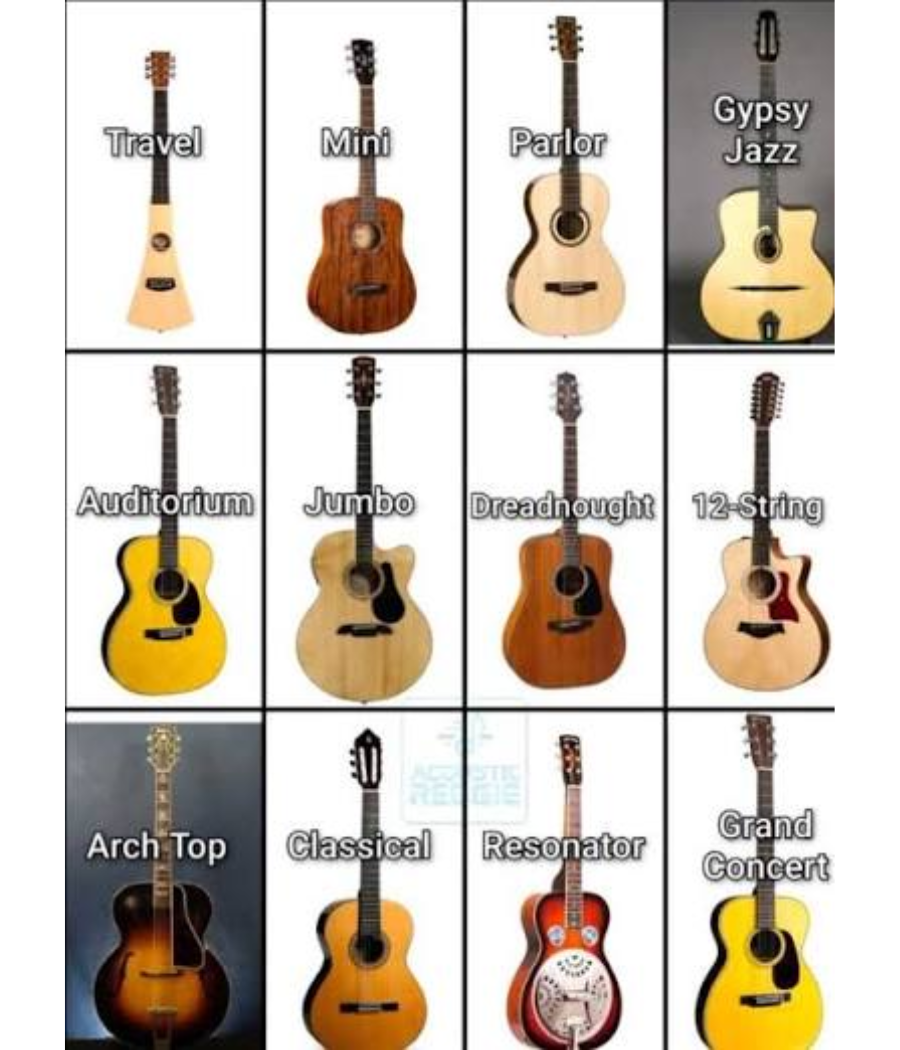
Why Acoustic Guitar Shapes Matter
When people say they want an acoustic guitar, they often picture the familiar large dreadnought. But acoustic guitars come in many body shapes, and each shape changes comfort, projection, tonal balance, and playing experience. Understanding the major types of acoustic guitars can make shopping much easier.
The goal is not to find the universally best shape. The goal is to find the shape that matches your hands, body, playing style, and musical purpose.
Dreadnought
The dreadnought is the workhorse of acoustic guitars. Its large body typically produces strong projection, a substantial low end, and plenty of volume. It is a natural choice for strumming, bluegrass, country, and players who want their acoustic to sound powerful.
For Christian dads, a dreadnought can work wonderfully for family worship because it can provide a full rhythm foundation without amplification. The tradeoff is size: smaller players or children may find it bulky.
Concert and Grand Concert
Concert-sized guitars are generally smaller than dreadnoughts and can feel more manageable. Grand-concert designs can offer a comfortable balance between projection and intimacy. These guitars are worth considering for fingerstyle players, casual home musicians, and people who want a less imposing body.
A smaller body can also make it easier for a parent and child to sit together and share the instrument during early lessons.
Auditorium and Orchestra Styles
Auditorium and orchestra-style guitars are often designed around balance. They can deliver enough bass for strumming while retaining clarity in the middle and upper registers. This makes them versatile choices for players who move between chords, fingerpicking, and melodic playing.
If you are not sure what style you will eventually develop, a balanced medium-sized body can be a smart starting point.
Jumbo
Jumbo guitars emphasize size and projection. They can have a big, enveloping sound and are particularly satisfying for players who love full strumming. They are less compact, so comfort should be tested rather than assumed.
Parlor
Parlor guitars have smaller bodies and roots in older guitar traditions. Modern versions can be excellent for fingerstyle, blues, songwriting, and players who enjoy a focused voice. Their smaller dimensions also make them attractive for travel and relaxed home playing.
Travel and Mini Guitars
Travel guitars trade some body size and acoustic authority for portability. They can be useful for vacations, camping, or keeping a guitar available when space is limited. For a child, a smaller-scale instrument can also make early learning less physically demanding, although you should still choose a properly sized children's guitar when appropriate.
12-String Guitars
A 12-string guitar has six courses of strings, with each course containing two strings. The result is a shimmering, chorus-like sound that can be beautiful for worship, folk, and recording. It is not usually the first guitar I would recommend for a beginner because string tension and doubled strings create additional demands.
How to Choose
If you primarily strum and want power, start by testing dreadnoughts. If comfort and versatility are priorities, explore concert or auditorium shapes. If you want portability, look at travel or parlor models. If you already have a six-string and want a distinctive second voice, consider a 12-string.
For a deeper comparison, continue to Dreadnought vs. Concert vs. Auditorium: Which Guitar Fits You?.
Faith Application
A guitar's shape does not determine the value of the music made with it. In the same way, Christian families are made up of different personalities and gifts. Romans 12 reminds believers that different gifts can work together as one body. The same can be true of guitars: different designs, different voices, one purpose—making music that brings joy and, when intended, praise.
Colossians 3:16 — “...singing psalms and hymns and spiritual songs, with gratitude in your hearts to God.”