
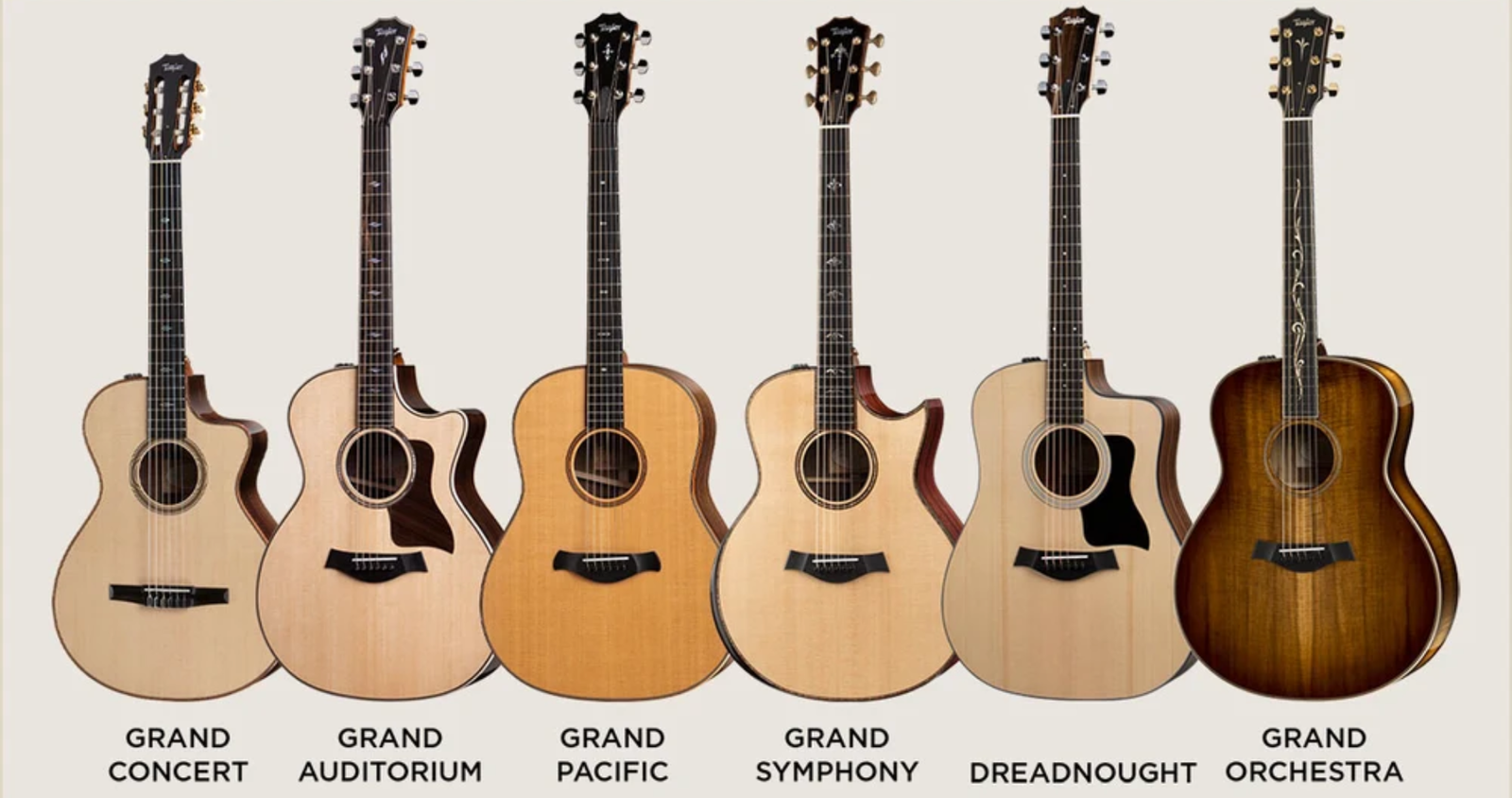
Three Popular Shapes, Three Different Experiences
Dreadnought, concert, and auditorium guitars are not simply different sizes. Their dimensions influence how the instrument feels against your body, how the air moves inside the sound chamber, and how the guitar responds to your hands. If you are deciding among these three, think about how you actually play rather than which silhouette looks best.
Dreadnought: Power and Presence
Dreadnoughts are usually the choice for players who love strong strumming and a full low end. They can hold their own in a group and have a familiar sound for country, folk, rock, and worship. Their larger body can be less comfortable for smaller players, however, and children may struggle to hold one correctly.
Concert: Comfort and Control
Concert guitars typically provide a smaller, more intimate playing experience. They can be comfortable for seated playing and often work well for fingerstyle or lighter strumming. For a dad teaching a child, a smaller guitar can make it easier to demonstrate hand position and let the child see the fretboard.
Auditorium: The Middle Ground
Auditorium guitars often occupy a useful middle position. They can provide a balanced voice without the bulk of a dreadnought. Players who do a little of everything—strumming, fingerpicking, worship, songwriting—often appreciate this versatility.
Compare Them by Playing Style
For heavy strumming, the dreadnought is an obvious candidate. For fingerstyle and quiet home playing, a concert may be appealing. For mixed playing, an auditorium is worth serious consideration. But these are tendencies, not laws. Individual guitars can break the stereotypes.
Compare Them by Your Body
A guitar should not force your shoulders upward or make your right arm feel awkward. Sit naturally and let the instrument rest against you. If your wrist bends sharply or the guitar feels like it is fighting your posture, try another shape.
For Worship and Family Music
For living-room worship, clarity and comfort often matter more than maximum volume. If you are leading a group without amplification, projection becomes more important. If you are plugging into a PA, the body shape still matters for unplugged practice, but electronics can change the equation.
The Best Test
Take the same short progression to the store—G, C, Em, D, for example—and play it on several body shapes. Then fingerpick a simple pattern. Listen to the low strings, the vocal range, and the way notes decay. Your hands and ears will tell you more than a chart.
Related Reading
Before buying, read The Different Types of Acoustic Guitars Explained and Acoustic Guitar Buying Guide for Christian Dads. Those articles cover the wider range of acoustic designs and the practical buying process.
Faith Application
1 Corinthians 12 teaches that differences do not have to create competition. The same principle can help guitar players: there is no need to declare one body shape the winner. The right guitar is the one that fits the person God made you to be and helps you use your gifts well.
1 Corinthians 12:4 — “There are different kinds of gifts, but the same Spirit distributes them.”