
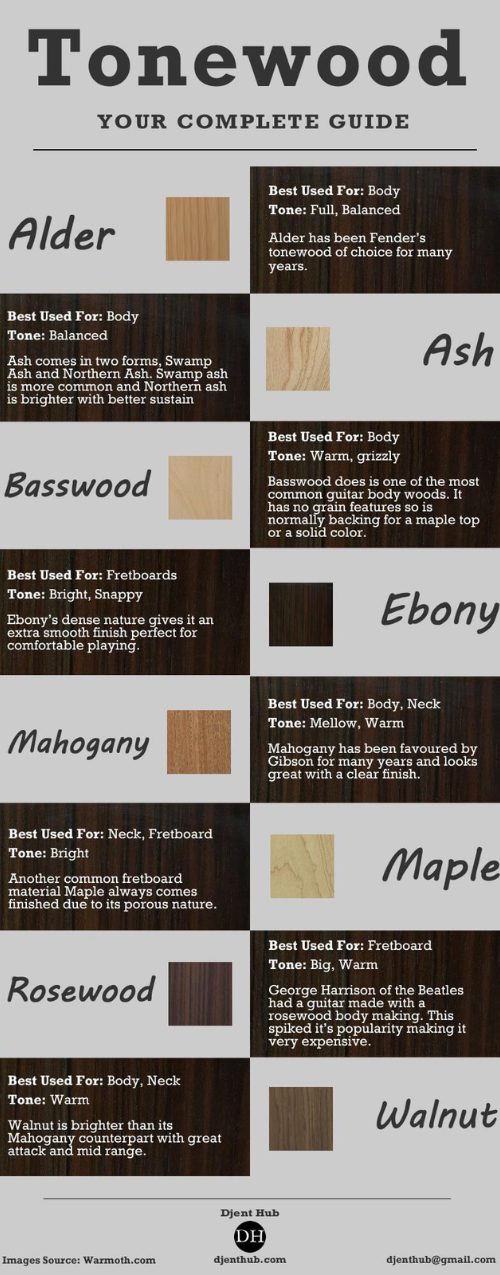
What Is a Tonewood?
Tonewood is a term used for woods selected for musical instruments because of their acoustic properties, workability, stability, and appearance. In acoustic guitars, the soundboard has a particularly strong influence on how the instrument responds. Back and sides also contribute to the overall voice.
Tonewood should be treated as one piece of the puzzle—not a guarantee of quality.
Spruce
Sitka spruce is common on acoustic guitars because it combines strength, responsiveness, and headroom. A spruce top can handle a wide dynamic range, making it useful for players who move from gentle fingerpicking to energetic strumming. European spruce and Engelmann spruce are also used and can have different response characteristics.
Cedar
Cedar is often associated with a warm, immediate response. It can reward a lighter touch and is popular with fingerstyle and players who want a softer, more intimate character. If your playing is gentle and expressive, cedar is worth trying.
Mahogany
Mahogany can be used for tops, backs, and sides. Mahogany-topped guitars are often described as focused, woody, and direct. Mahogany backs and sides can contribute a strong midrange character. These descriptions are useful starting points, but the actual instrument must be heard and played.
Rosewood
Rosewood has long been popular for backs and sides. It is often associated with pronounced bass and treble and a complex overtone response. Brazilian rosewood is historically prized, while Indian rosewood is common on modern instruments. Availability, regulation, and price vary, so buyers should check current documentation when purchasing vintage or imported instruments.
Maple
Maple is often chosen when a clear, articulate sound and striking visual figure are desired. It can be especially effective in settings where note definition matters. Flamed and quilted maple can also make a guitar visually dramatic.
Walnut and Other Woods
Walnut, koa, ovangkol, sapele, and other woods can produce excellent guitars. Modern builders increasingly use a wide range of materials, and many players discover that less traditional woods suit them beautifully.
How to Choose
Instead of memorizing claims like 'spruce equals bright' or 'cedar equals warm,' listen to several guitars. Play the same chord progression. Record short clips on your phone if the store permits. Notice attack, sustain, note separation, and how the guitar responds to soft versus hard playing.
A Christian Perspective
God's creativity is visible in the astonishing variety found in creation. Tonewoods give guitar makers different materials with which to create different voices. That variety can remind us that worship does not require every person to sound identical. Psalm 96 invites God's people to sing a new song; the important question is how faithfully we use what we have been given.
Continue Learning
For the practical side of buying, read Acoustic Guitar Buying Guide for Christian Dads. To understand construction, continue with Solid Wood vs. Laminate: Does It Really Matter?.
Psalm 96:1 — “Sing to the LORD a new song; sing to the LORD, all the earth.”